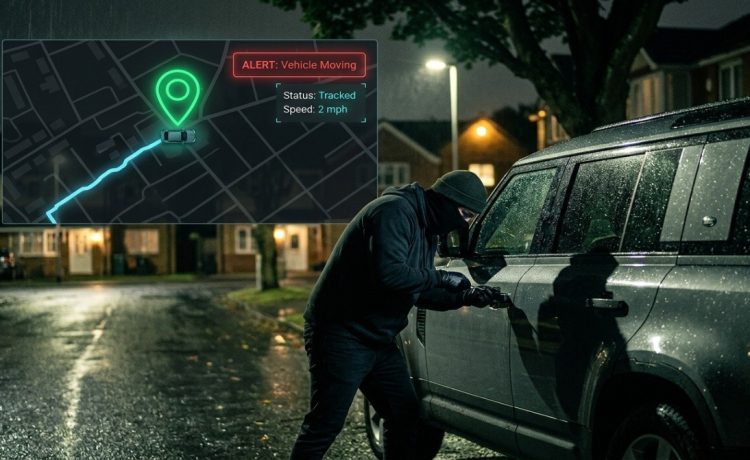
Once reserved for fleet managers and rental agencies, a GPS tracker on your vehicle is now commonplace. In 2024, 850,708 cars were stolen in the US, or one every 37 seconds, and the rate of thefts only remains that low because more owners are finally installing aftermarket GPS trackers that send out an alert to law enforcement before their car is stolen forever.
The National Insurance Crime Bureau (NICB) reports the recovery rate for vehicles with active GPS tracking is more than 90 percent, compared to 60 percent for vehicles without.
An alarm just lets your neighbors know there’s a problem. A GPS tracker tells the police where your car is at that moment while it is still in transit. These are two very different things, and once you know what a GPS tracker does, most car owners have a whole new perspective on car security.
How Does GPS Vehicle Tracking Actually Work?
GPS vehicle tracking consists of three components: a GPS receiver in the tracker, a cellular modem that transmits data, and a secure cloud server that displays the information on your computer and mobile device.
The vehicle tracking device in your car receives GPS signals from satellites, and uses trilateration to determine its position, comparing signals to at least four satellites. This data is then sent every 10-30 seconds via 4G LTE to a secure computer server, which displays your vehicle’s position on your mobile phone app.
The recovery numbers here are hard to argue with:
- Vehicles with active GPS tracking: 90%+ recovery rate
- Vehicles without GPS tracking: 60% recovery rate
- Average GPS-assisted recovery time: 4.2 hours
- Average recovery time without GPS: 48+ hours or longer
After 48 hours, most stolen cars have been stripped or repainted, or moved out of state. The tracker eliminates this gap.
Today’s trackers are installed in two main ways. An OBD-II plug-in tracker plugs into the diagnostic port under your steering wheel and operates on the vehicle’s power, so you don’t have to charge it. A hardwired tracker plugs into the vehicle’s electrical system, and is hidden and impossible to tamper with. Both provide you with live tracking information.
What Protection Features Do GPS Trackers Give You?
Real-time location is the foundation, but the security features built around it are where GPS trackers earn their place as a serious anti-theft tool. A basic location app tells you where your car is when you ask. A GPS tracker with active monitoring tells you the moment something goes wrong, without you having to check anything.
Geofencing Alerts
Geofencing allows you to create a virtual fence on a map around your home, office, or other parking location. If the car moves outside of that area, you receive a real-time notification. In the case of a nighttime theft, according to the NICB, most car thefts occur between 8pm and midnight, a geofence alert will go off before the car has been stolen and driven a few blocks. You can report the theft to the police with the car’s current speed and location.
Tamper and Motion Detection
Top-notch GPS trackers feature an accelerometer to sense vibration and acceleration. If someone jolts your car to try and crack the windows, or if someone tows it, you’re instantly notified. Hardwired trackers also generate an alert if anyone attempts to disconnect the unit itself, which means a thief who finds and tries to remove the tracker creates an alarm at the exact moment they think they are disabling your protection.
24/7 Live Location Sharing with Law Enforcement
When a vehicle is stolen, a real-time location is the best way to help police catch the thief, not a description of a parking lot. Using GPS apps, you can send a link to your live location to the police – and they can track down a moving target instead of searching a static location.
Trip History and Driver Monitoring
Beyond theft protection, GPS trackers record every trip your vehicle makes with timestamps, speed data, routes taken, and stop durations. For vehicle owners with teenage drivers, fleet operators, or anyone who shares a car, that historical record delivers full accountability without requiring a conversation every time someone takes it out.
OBD-II, Hardwired, or Magnetic: Which Type Is Right for Your Car?
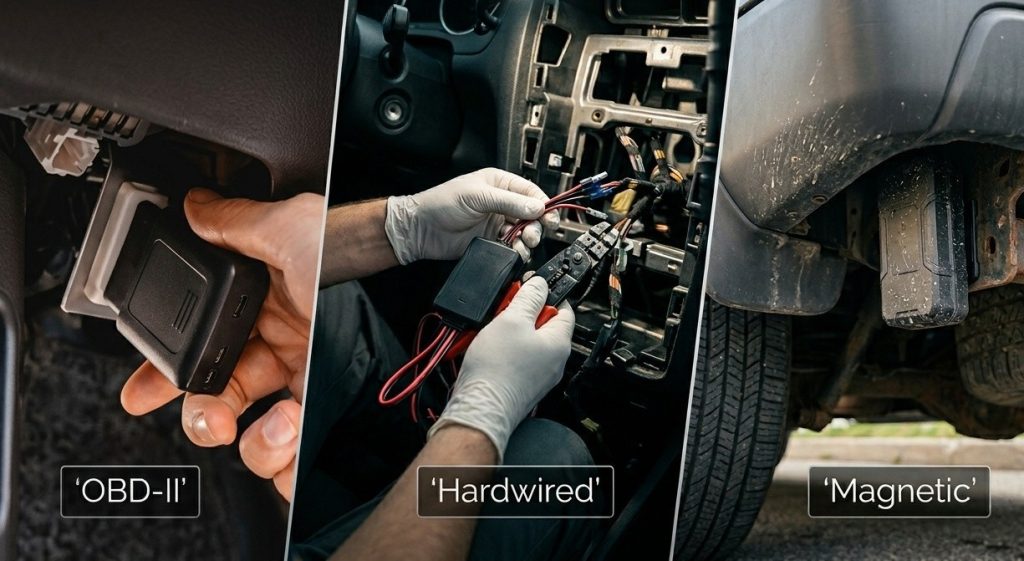
Choosing the wrong tracker for your vehicle creates a worse outcome than having no tracker at all. An easily removable device that a thief can unplug in ten seconds is not anti-theft protection. Here is how the three main hardware types compare:
- OBD-II plug-in trackers are the fastest to deploy. No tools, no installer, no vehicle downtime. They receive power from the vehicle continuously and begin tracking instantly. The trade-off is that they sit in a known location. Best for everyday monitoring, teen driver oversight, and fleet management.
- Hardwired GPS trackers are wired directly into the vehicle’s electrical system and hidden behind panels or under seats. Removing one requires tools and time. Best for high-value vehicles, commercial vans, and any situation where covert installation is the priority.
- Magnetic battery-powered trackers are affixed to the underside, wheel wells, or behind bumpers with heavy-duty magnets. Useful for trailers, motorcycles, boats, and any items without an OBD port. Update rates vary from a few days to months of battery life with low-frequency check-ins.
For vehicle owners who want professional-grade options across all three categories, BrickHouse Security’s vehicle GPS trackers cover OBD plug-in, hardwired, and magnetic formats, all managed through a single real-time platform trusted by fleet operators, law enforcement, and individual vehicle owners since 2005.
Which Vehicles Are Stolen Most in 2025?
Some vehicles are more vulnerable to theft than others, and it’s helpful to know where your brand and model fall on the National Insurance Crime Bureau (NICB) list of how often vehicles are stolen to determine how desperately your vehicle needs a GPS tracker.
According to 2025 NICB data, the most frequently stolen vehicles in the US are:
- Hyundai (most targeted overall due to pre-2022 immobiliser gaps)
- Honda
- Kia
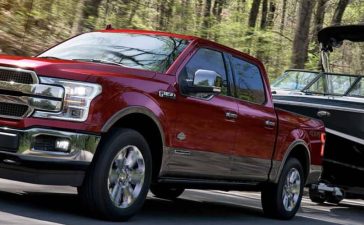
- Ford F-Series
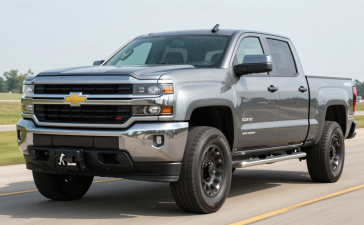
- Chevrolet Silverado and full-size pickups
- Ram Pickup
- GMC Sierra
Full-size pickups are targeted primarily for their high resale value and accessible market for stolen parts. A GPS on a pickup truck not only secures the vehicle but also the tools, equipment, and load most pickups carry, none of which insurance will replace at full value.
Does a GPS Tracker Lower Your Car Insurance Premium?
Yes, and the discount can be meaningful. Leading US insurance companies like GEICO, State Farm, and Nationwide provide anti-theft discounts with approved safety devices. GEICO claims up to 23 percent discount on applicable premiums.
Before buying a tracker, ask your insurance company two questions:
- Which anti-theft devices qualify for a discount on your policy?
- What documentation do they need after installation?
Some need an installer’s certificate. Some only require the device model and activation. This will confirm your eligibility for the discount, rather than finding out later that your device is ineligible.
Fleet managers report that the cost of a GPS tracker is paid for in 12 to 18 months by the insurance discount. For personal car owners, the decision to use a GPS tracker is typically a good one if you use the car for two to three years and factor in insurance cost reductions, avoided deductibles and lower rental costs if your car is recovered.
What to Look for When Buying a GPS Tracker for Your Car
There are lots of GPS trackers, with a large price spread. Understanding what features are important saves you money. Here are the top four to look for:
- Update frequency: For theft recovery, look for 10-30 second updates. To monitor, 60 seconds is enough. This difference allows you to capture the thief a few blocks from home instead of on the freeway.
- Cellular network coverage: Ensure the tracker is compatible with a major US carrier’s 4G LTE network. Low-end networks are prone to drop-outs when you need the most coverage.
- Alert customisation: With a good tracker, you can enable or disable motion alerts, geofences, speed zones, tamper, and low battery alarms. False alarms desensitize you to all alarms.
- Subscription terms: A $30 tracker with a $40/month, three-year contract is more expensive than a $100 tracker that can be changed monthly. Add up the cost of 24 months.
For vehicle owners looking for a reliable starting point, BrickHouse Security has been providing professional GPS tracking devices to individual owners, fleet operators, and government organizations since 2005. Their vehicle tracking range includes OBD plug-in, hardwired, and magnetic options, all backed by 24/7 support and flexible subscription plans.
How to Install a GPS Tracker on Your Car
Three installation methods exist depending on the type of tracker you choose. Each one suits a different vehicle, use case, and level of permanence.
1. OBD-II Plug-In Tracker
The fastest installation of the three. Any vehicle owner can complete it in under five minutes without tools.
- Locate your OBD-II port – on most vehicles built after 1996 it sits under the dashboard on the driver’s side, near the steering column or centre console
- Plug the GPS tracker directly into the port until it seats firmly, the device powers on automatically using the vehicle’s electrical system
- Download the companion app on your smartphone and create your account using the device’s serial number or activation code
- Allow two to five minutes for the device to acquire satellite signal and establish its first cellular connection. Your vehicle’s live location will appear on the app once this completes
- Set your geofence boundaries, motion alerts, and notification preferences through the app before driving away for the first time
2. Portable Battery-Powered Tracker
Ideal for trailers, motorbikes, boats, secondary cars, or any asset lacking an OBD port. Easy installation requires no tools or wiring, but location is critical for both performance and prevention.
- Charge the tracker fully before mounting it, which will take two to four hours from a completely discharged and it should be fully charged before being hidden in a spot that will be difficult to recharge
- Select a positioning site that is concealed yet allows the GPS signal to penetrate. Under-bumper mounts, rear wheel wells, and inside license plate holders are good choices, but don’t use a fully metal-enclosed cavity as this will completely block the GPS signal so test fit first
- Secure the device using the magnets built into the device or a magnetic holder, hold against a metal surface for 5-10 seconds to ensure a strong bond, then remove it
- Turn on the tracker in the tracking app and check that the position is correct at the mounting location. Live location within 20-30 feet of the actual position indicates a strong signal
- Program motion alerts and low battery warnings right away, as a battery-operated tracker that goes dead is useless – set an alert at 20 percent battery level to give you time to recover and recharge the tracker
3. Hardwired GPS Tracker
The most secure and fixed installation. Hardwired GPSs are wired into the vehicle’s electrical wiring system and are hidden under a panel or the seats. For most car owners, hardwired units are best installed by a professional, although some hardy DIYers with an interest in electricity can do it themselves.
- Always remove the negative battery terminal before working on the wiring to avoid short circuits or electrical issues during installation
- Select a hidden mounting spot for the tracker: under the dashboard, behind the glove box, under a rear seat, or a door panel, are all popular locations that hide the tracker from being found by casual search
- Use a switched 12-volt power connection for the tracker; best is an ignition fuse slot, because the tracker will turn on when the ignition is switched on and not use power when the vehicle is switched off (saving the battery over time)
- Hook up the ground wire to a bare metal point on the chassis; a poor-quality ground is the main reason for a shaky signal with hardwired trackers
- Route the wiring behind trim panels and secure with ties. This gives away the installation and will fail if the connection works loose due to vibration
- Reattach the negative battery cable, start the car engine, and check the tracker remains connected via the app before securing panels in place
An installation of a hardwired GPS tracker typically takes 30-60 minutes for an installer to complete. If you are not experienced in automotive wiring, it’s best to have a professional install the tracker, as a poorly installed tracker can drain your battery or cause more damage than the cost of the tracker itself.
Final Verdict: Is a GPS Tracker Worth It?
With 334,114 vehicles stolen in the first half of 2025 and theft techniques such as relay attacks, key cloning, and hacking the car’s OBD port, which bypass car alarms in less than 60 seconds, GPS tracking is no longer a convenience option; it is the best line of defense against car theft for private vehicle owners.
No theft-prevention system stops a thief if they are determined. What a GPS tracker does, however, is what happens after the theft. A 90%+ recovery rate, 4.2-hour average recovery time, up to 23% reduction in insurance premiums and real-time law enforcement support are not benefits that come with a steering wheel lock or factory-fitted alarm system.
The investment is modest. The cost of theft certainly is. For a majority of drivers, the only question is which model of tracker to choose, and the answer to whether or not to use one is obvious.
Frequently Asked Questions
Can a car thief detect or disable my GPS tracker?
Rapidity trumps stealth for car thieves. A study of interviews with law enforcement found that only 5 to 10 percent of thieves specifically look for GPS devices when stealing a car, and most take less than 60 seconds to steal a car. Hardwired and hidden magnetic trackers are difficult to detect. If a thief does try to take a hardwired tracker, most devices send an immediate tamper notification if interference is detected.
Do GPS trackers work in parking garages or underground?
GPS accuracy is reduced in parking garages since this obstructs the satellite signals. Nowadays, trackers can also use mobile phone triangulation and Wi-Fi positioning, resulting in quite accurate positioning in most parking facilities in larger cities. GPS signals are usually back to normal within a few seconds of exiting the garage.
Is it legal to put a GPS tracker on your own car?
Yes. Placing a GPS tracking device on your vehicle is legal in every state. Problems may occur if you track a vehicle without the owner’s permission. In the case of fleet managers tracking their company’s fleet, most states require written notice for employees before any tracking takes place.
How much does a car GPS tracker cost per month?
For commercial fleet vehicle GPS trackers, the average monthly fee is between $15 and $40 per unit. Hardware prices range from as low as $30 for plug-in OBD trackers to $150 or more for hard-wired or magnetic trackers. When estimating cost, consider the insurance discount your tracker may earn you, typically 15-23 percent, which may save you hundreds of dollars in 12-24 months to offset the subscription cost.