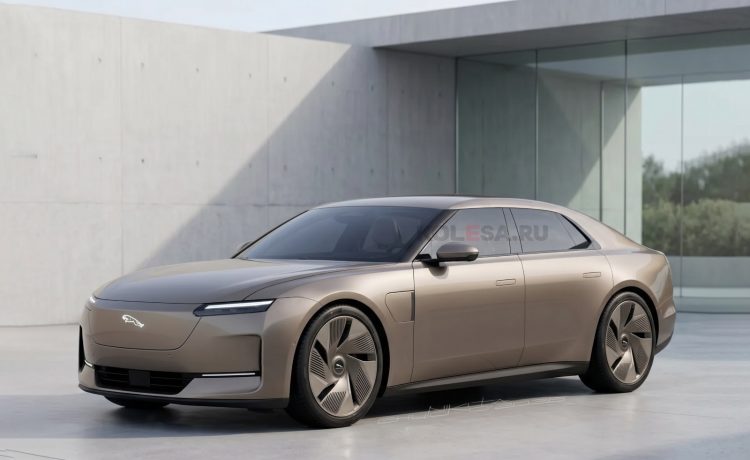
Jaguar is moving toward a new electric sedan, still carrying the temporary GT name until the company confirms a final badge. The debut is scheduled for September, while the production body remains hidden under camouflage for now. New digital renderings signed by Nikita Chuiko for Kolesa attempt to show how the finished car should look once the covers disappear.
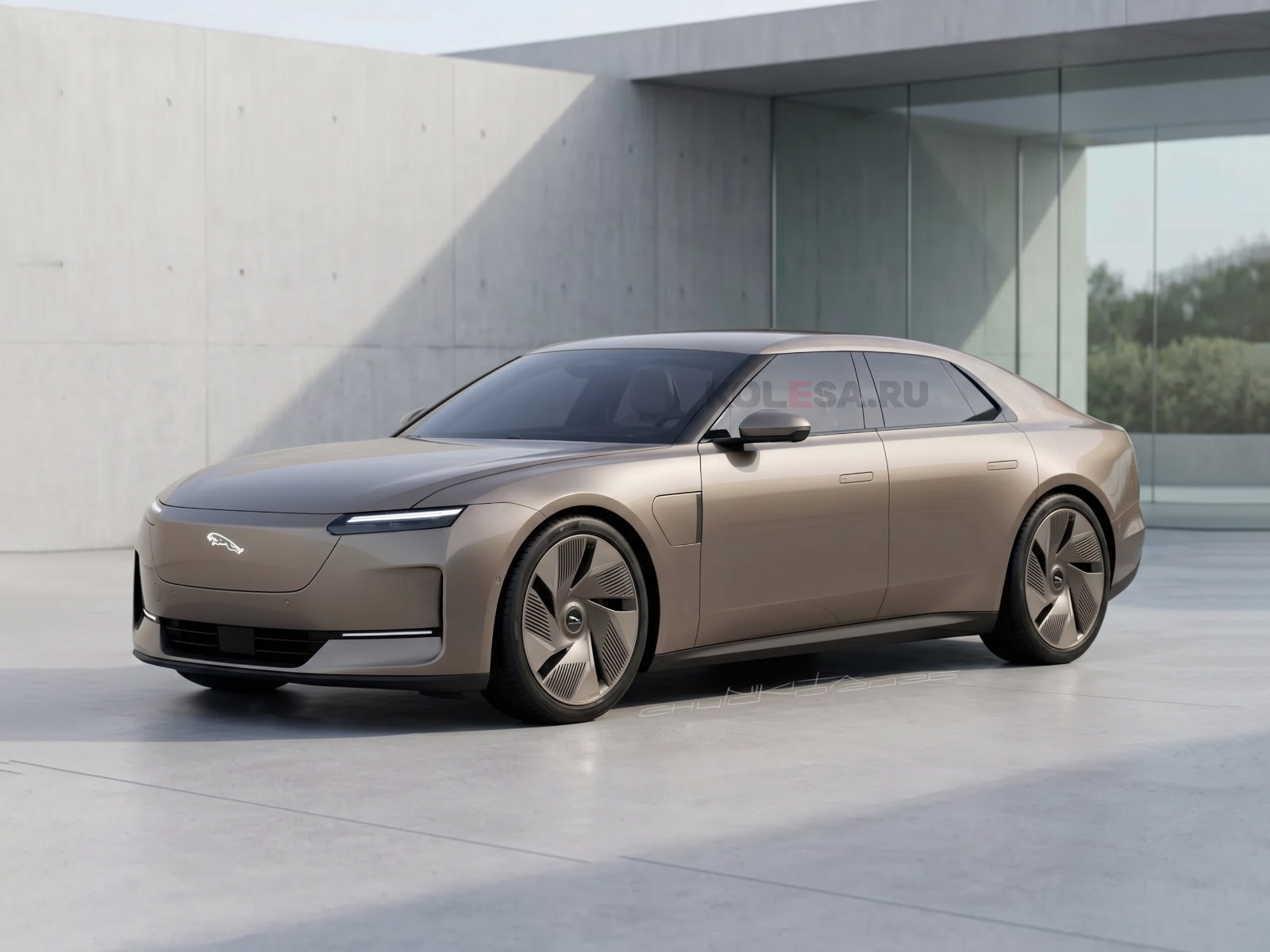
The proportions follow a tall-shouldered four-door layout with a flat upper section and a roofline shaped through thick pillars. From the side, the upper half appears almost upright, while the lower body stays cleaner, with flush door handles and sharp side skirts. A charging port sits on the left front fender, and the render keeps ordinary door-mounted mirrors instead of camera units.
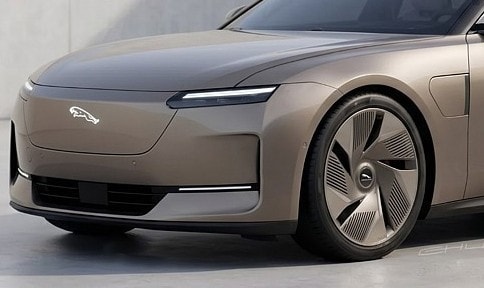
The front section takes another direction. Jaguar uses a closed-off grille panel with an illuminated Jaguar logo placed centrally. Main headlamps stay narrow, while the daytime-running lights positioned lower become even slimmer. Vertical openings appear near the bumper edges, and a large central intake remains visible below.
At the rear, the body gains broad shoulders and thick C-pillars, elements likely to affect visibility over the back corners. Two full-width light strips serve as taillamps, while the Jaguar emblem appears below them. The license plate recess sits low on the bumper and carries reflectors on both sides. Aero-style wheels complete the exterior, together with a paint shade linked visually to older Jaguar tones.
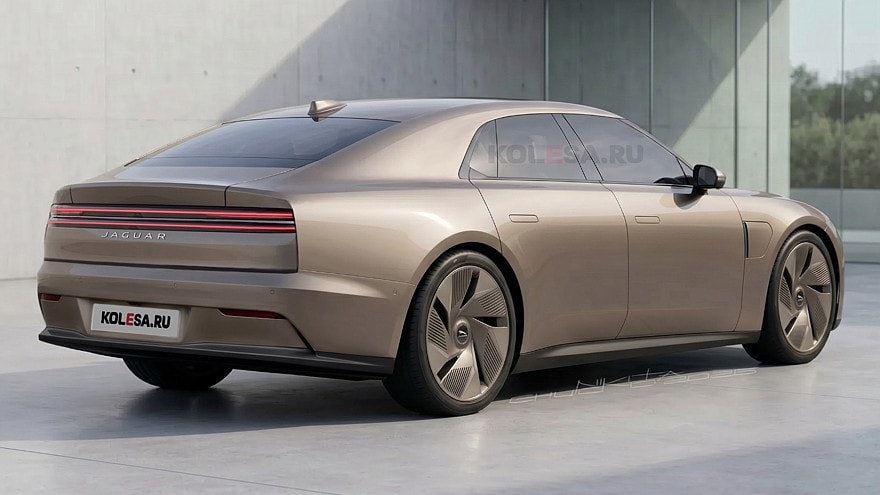
The car rides on Jaguar’s Electric Architecture and reaches close to 6,000 pounds, or around 2,700 kilograms. Under the body, Jaguar plans three electric motors with output expected above 986 horsepower. No battery figure appears yet, and no range figure has been attached in the material shown so far.
The official name remains unsettled, though GT continues to circulate around the project. Jaguar has not yet released uncovered images, so these renderings follow recent spy material and visual details already observed on test vehicles.
The overall shape does not follow the older Jaguar sedan formula. The upper body looks almost square at first glance, then the lower section tries to smooth the profile again. There is a slight contradiction there, though maybe this is intentional. Jaguar appears willing to accept a sharp break from earlier design habits.
Public reaction will become clearer once the production version reaches daylight in September. Until then, these illustrations suggest a large electric sedan with familiar premium cues, though arranged in a new order, and with enough output to place performance high on the priority list.