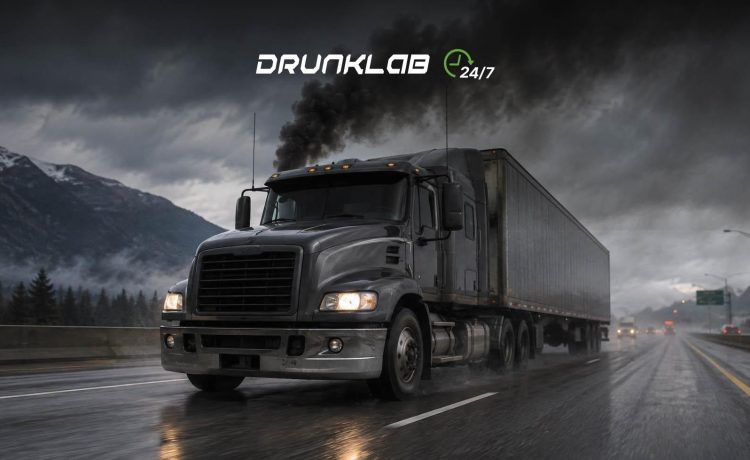
Why does a diesel truck keep requesting regeneration, fail to complete a regen, or eventually enter a derate condition? DPF problems are often caused by something other than the filter itself. Soot accumulation, ash buildup, low exhaust temperatures, faulty sensors and engine problems, and even exhaust system restrictions can cause regeneration failure and DPF buildup.
Diesel particulate filters (DPF) capture soot and require periodic removal by a regeneration process. Soot can be burned during regeneration, but non-combustible ash cannot be burned off and remains in the system blocking the filter.
It is essential to figure out the real restriction because replacing a DPF for any other reason than a failed DPF can result in the same fault returning.
Table of Contents
Short Trips, Idling, and Low-Load Operation
A primary cause of DPF issues is an operating cycle that does not allow the exhaust system to attain the temperatures necessary for an adequate regeneration.
If trucks are idling, operating at low loads, or making short trips, regeneration is passive, but soot begins to build up. More frequent active or parked regenerations are then needed.
This is especially common with vocational, delivery, utility, and other trucks that spend significant time at low engine load.
If regeneration repeatedly fails to complete, the DPF can eventually become heavily restricted and trigger warning lights, fault codes, or an engine derate.
Excessive Soot Production
Sometimes the DPF is simply doing its job—but the engine is producing too much soot.
Potential causes include:
- EGR problems
- Fuel injector faults
- Turbocharger or VGT problems
- Intake or charge-air leaks
- Restricted air intake
- Incorrect fuel delivery
- Other engine control or mechanical problems
If there is a buildup of soot in the exhaust, the DPF can fill up faster than regeneration can clean it.
Important: If a truck needs DPF cleaning or regeneration unusually often, the engine should also be checked. Soot continues to accumulate faster than it can be removed, so the problem is likely to return.
Failed or Incomplete Regeneration
A regeneration cycle requires several systems to work correctly. The engine must be able to maintain the required operating conditions, exhaust temperatures must reach the necessary range, and the ECM must receive valid information from its sensors.
Regeneration can fail because of:
- Low exhaust temperature
- Exhaust temperature sensor faults
- DPF pressure sensor problems
- Fuel dosing problems
- Engine or EGR faults
- Turbocharger/VGT issues
- Other active diagnostic trouble codes
Repeated incomplete regenerations allow soot to accumulate and may eventually prevent the truck from performing another normal regeneration.
A forced regeneration should therefore not be treated as a universal solution. If the underlying problem remains, the next regen may fail again.
DPF Pressure and Temperature Sensor Problems
The DPF system depends heavily on sensor data.
A differential-pressure sensor measures the pressure difference across the DPF and helps the ECM estimate filter restriction and loading. Damaged pressure lines, plugged ports, wiring problems, or a faulty sensor can produce incorrect readings.
Exhaust gas temperature sensors are equally important because regeneration depends on maintaining and monitoring the required exhaust temperatures.
A faulty sensor can therefore create what appears to be a DPF problem even when the filter itself is not severely restricted.
Before an expensive DPF is replaced, technicians should confirm readings of all sensors, wiring, connections, and pressure lines.
DPF Ash Accumulation
Soot and ash are not the same thing.
Regeneration burns soot, but it does not remove ash.
As a truck accumulates mileage and engine hours, non-combustible ash gradually builds up inside the DPF. This reduces the filter’s available capacity and can increase exhaust backpressure.
Eventually, a DPF may remain restricted even though regeneration is working normally.
At that point, another regeneration will not solve the problem. The filter must be professionally cleaned or replaced if it is damaged.
Damaged DPF or Other Aftertreatment Components
A DPF can also suffer physical damage. Excessive temperatures, engine problems, or other failures can crack, melt, or collapse the filter substrate.
In addition, the DPF is only one part of the truck’s aftertreatment system. Problems with fuel dosing components, oxidation catalysts, SCR components, NOx sensors, or electronic control modules can interfere with normal regeneration and aftertreatment operation.
For this reason, a DPF warning should be investigated as part of the complete engine and aftertreatment system rather than as an isolated filter failure.
How to Diagnose a DPF Problem
The correct diagnostic process starts with finding out why the DPF became overloaded.
A technician should typically:
- Read active and stored diagnostic trouble codes.
- Check DPF differential pressure and calculated soot load.
- Check the exhaust temperature sensor readings.
- Review history of regeneration.
- Inspect for excessive engine soot production.
- Inspect the EGR, turbocharger, intake, and fuel systems when necessary.
- Determine whether the restriction is caused by soot, ash or physical damage.
This helps separate a genuinely restricted DPF from regeneration problems caused by other faults in the engine or aftertreatment system.
How DrunkLab Can Help
DrunkLab has extensive experience with diesel truck electronics, ECUs, engine control systems, and aftertreatment-related problems. The company develops its own software and hardware, including the Mochester App (M4 App), VLOMINGO and RAZDOLBOSCH tuning adapters, and VILKUS-62 DPF/SCR-off emulator solutions.
DrunkLab supports a range of commercial diesel platforms, including Volvo Group trucks (Volvo, Mack, Renault, and UD Trucks), Prevost buses, Volvo Penta, and Volvo Construction Equipment. It also supports Cummins, Detroit Diesel, and PACCAR engines and provides remote technical assistance for compatible applications. Its experience with ECU programming can help diagnose and, in some cases, remedy many DPF-related issues that present with persistent fault codes, ECU communication problems, software issues, and other electronic faults.
Depending on the vehicle and applicable regulations, DrunkLab can assist with free fault code reading, ECU programming, stock restoration, and other supported electronic services.
It is important to remember that emissions-system modifications may be restricted or illegal for on-road vehicles depending on the jurisdiction. Any modification should therefore be evaluated against applicable federal, state, and local requirements.
The Bottom Line on DPF Problems
DPF problems are not always caused by a bad DPF. Low exhaust temperatures, excessive soot production, failed regeneration, faulty sensors, ash accumulation, engine problems, and physical filter damage can all produce similar symptoms.
It is important to identify the root cause before replacing or cleaning the filter whenever possible. The root cause may be a problem with another component that needs to be repaired or replaced to keep the DPF issue from coming back.