Modern BMW vehicles rely on authorised dealership diagnostic systems for structured service logging.
Buying a used BMW in the United Kingdom is rarely an emotional decision alone. While styling, performance and brand reputation attract buyers initially, long-term ownership satisfaction depends heavily on one critical factor: documented maintenance history.
Modern BMW vehicles are technologically advanced machines. Turbocharged engines, high-pressure fuel systems, electronically controlled automatic transmissions, adaptive suspension systems and interconnected control modules require disciplined servicing. Unlike older vehicles with simple stamped service booklets, most BMW models rely on digital dealership systems that log workshop activity internally against the vehicle’s VIN.
Understanding how this system works and how to properly verify it before committing thousands of pounds is often the difference between acquiring a well-maintained vehicle and inheriting hidden mechanical liabilities.
Table of Contents
Why Service History Matters More in Modern BMWs
BMW engineering prioritises performance, efficiency and driving dynamics. These benefits come with increased mechanical and electronic complexity. Even minor deviations from recommended maintenance intervals can accelerate wear in high-load components.
- Turbocharged diesel and petrol engines depend on clean oil and timely changes.
- ZF automatic transmissions require fluid servicing despite “lifetime” marketing claims.
- Electronic steering and suspension systems rely on regular diagnostic calibration.
- Battery management systems depend on properly functioning IBS monitoring.
Inconsistent servicing does not always create immediate symptoms. Problems may surface months or years later, often outside warranty coverage. This delayed consequence makes service history verification particularly important when buying used.
The Shift from Paper Booklets to Digital Dealer Records
Historically, buyers relied on stamped service books as proof of maintenance. Today, BMW service data is primarily stored within internal dealership systems. Authorised workshops log visits digitally, attaching entries directly to the vehicle’s VIN.
These entries may include:
- Date and mileage at time of visit
- Maintenance category (Oil Service, Inspection, Brake Fluid, etc.)
- Warranty repairs and goodwill work
- Technical measures and recalls
- Software updates
- Diagnostic notes and fault codes
Unlike paper records, digital entries are not physically transferable documents. They exist within dealership infrastructure and are accessed through controlled systems.
The VIN as the Central Data Key
The VIN connects production data, dealership visits and recorded service history.
At the core of BMW’s service documentation structure lies the Vehicle Identification Number (VIN). This 17-character identifier connects production data, warranty records, recall tracking and authorised service entries across the network.
Each authorised dealership visit is recorded against this VIN. Service data is therefore embedded within BMW’s backend network architecture rather than attached solely to paperwork.
For a detailed breakdown of how BMW service history verification works in the UK and what information can realistically be accessed, this guide explains the process step by step: how to check BMW service history in the UK.
Why “Full Service History” Can Be Misleading
The phrase “Full Service History” appears frequently in classified listings. However, it is not legally standardised and can represent different realities:
- Complete authorised dealer history
- Mixed dealer and independent servicing
- Retrospectively stamped booklets
- Partial documentation
- Digital records without printed proof
Without structured verification, the phrase alone provides limited assurance. Buyers should focus on documented consistency, mileage progression and maintenance timing rather than marketing labels.
Mileage Consistency: The Overlooked Indicator
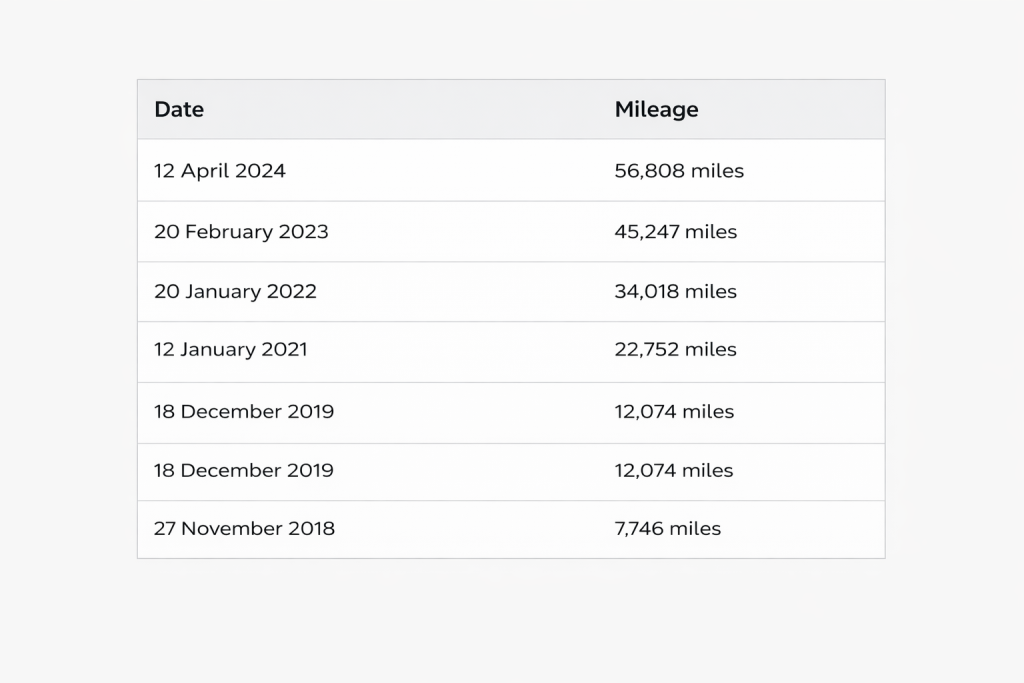
Structured mileage progression across MOT and dealership records strengthens verification.
Mileage readings form the backbone of service history evaluation. In the UK, MOT records provide annual mileage checkpoints. Authorised BMW workshops may record additional mileage entries between MOT inspections.
When cross-referencing:
- MOT data
- Authorised dealership entries
- Service interval timing
a logical chronological pattern should emerge. Sudden drops, unexplained stagnation, or irregular jumps require clarification.
Common Service History Red Flags in Used BMWs
Extended Oil Change Intervals
While BMW’s Condition Based Servicing allows flexibility, excessive extensions beyond recommended intervals increase long-term wear risk.
Service Gaps Exceeding Two Years
Even low-mileage vehicles should undergo periodic servicing. Long gaps may suggest undocumented maintenance.
Repeated Advisory Entries
Recurring warnings such as brake fluid overdue, battery IBS alerts or DSC faults may indicate deferred maintenance.
Incomplete Recall Completion Records
Safety campaigns should be logged as completed within authorised systems.
Financial Consequences of Incomplete Verification
Skipping structured service history analysis may not show consequences immediately. However, potential repair costs on premium German vehicles frequently exceed:
- £2,000–£3,000 for turbocharger replacement
- £3,000–£5,000 for transmission repair
- £1,500–£2,500 for suspension system overhaul
- £1,000+ for electronic module replacement
Compared to these figures, verifying documentation is a rational safeguard.
How Professional Buyers Approach Verification
Independent traders, finance providers and fleet managers rarely rely solely on seller representations. They analyse:
- Chronological servicing intervals
- Warranty repair frequency
- Mileage consistency
- Technical campaign completion
- Diagnostic entries
This systematic approach reduces uncertainty and protects investment value.
How BMW Service Data Is Structured Internally
BMW service history data is structured around the VIN and dealership visit logs.
BMW’s internal service architecture links production data, authorised dealer visits, warranty records, technical campaigns and recall tracking into a unified VIN-based framework. This allows continuity when vehicles change ownership or location within the UK.
Final Thoughts
BMW remains one of the most desirable used vehicle brands in the UK. Performance, driving dynamics and engineering quality attract enthusiasts and practical buyers alike.
Understanding how BMW service history is recorded, structured and verified provides a measurable advantage when evaluating a used vehicle. Buyers who analyse maintenance patterns, mileage progression and dealership entries position themselves more securely than those who rely on assumption.
In an increasingly data-driven automotive marketplace, informed verification is not excessive caution it is responsible ownership planning.
For buyers seeking structured verification of authorised UK dealership records, specialist platforms such as VinHistory provide VIN-linked access to manufacturer-backed digital service data.