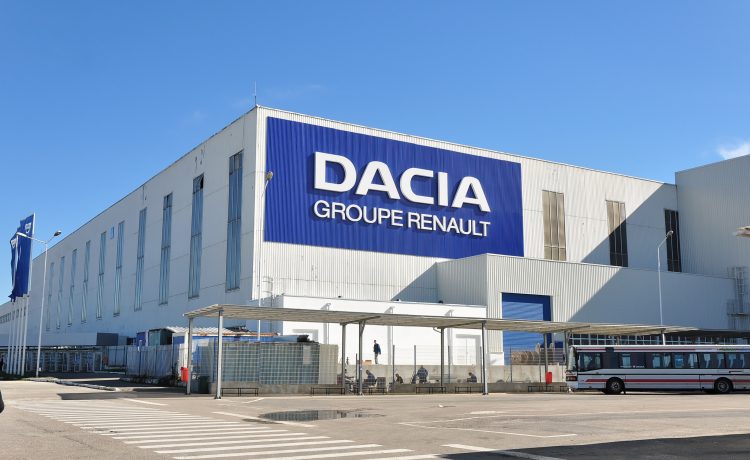
After the groundbreaking decision that marks the beginning of a new dawn for the Mioveni-based marque, Dacia will unveil the name of its new compact crossover on March 5, signalling the first of two new models that the brand will roll out this year. It is a move at the same time as the Renault Group is announcing a high-level strategic plan known as futuREady, a roadmap that will help direct the firm through the tectonic disruptions that are transforming the world of automobiles. Although the specifics of futuREady will be announced on March 10, the car industry will already be allowed to take a taste of what it plans to do by introducing new car names.
The news given by Renault in February pointed out the fact that a new concept car would be shown on March 4, and this car would work as the precursor to the upcoming models. However, it will be the unveiling of the compact crossover that will actually turn into the headline for Dacia enthusiasts and is internally referred to as C-Neo. It will be a central part of the expansion strategy of this brand, and it will provide a combination of affordability and practicality, as well as the roughness that has now become synonymous with the Dacia design philosophy.
The outstanding feature of the production scheme of the C-Neo is the geographical change: the model will be produced in Turkey, which has never happened in the history of the brand. This move highlights the effort that Renault has in streamlining its global supply chain and reaching into the strong automotive production base and infrastructure in the region. The relocation of production also helps Dacia to lower its costs and logistics and launch the new crossover into the market at a more efficient rate without compromising on the quality for which the brand is known.
The future introduction of C-Neo will come at a convenient time to be consistent with the overall goal of the futuREady plan. The Renault initiative is an attempt at future-proofing the operations by adopting the principles of electrification, digitalization, and sustainability, and is also an attempt at creating the portfolio that would appeal to a broad range of consumer groups. It is this compact crossover of Dacia that not only gives the group a good presence in the mainstream economy market but also demonstrates a versatile platform, as it can be scaled with the new technology in the future, with the possibility of being electrified.
The second model that is under development and will see the light of the day later this year will be presented by Dacia, and people are eager to learn more about it. Nevertheless, the next release on March 5 will surely leave an impression on the scale of prices and novelty, cumulating the perception of Dacia as the brand that does not deprive the design or performance.
To conclude, the next declarations on March 5 can be deemed as the critical milestones of the Renault Group and its Dacia branch. They show a clear path towards an agile-technology-oriented future and go on to provide high-value, low-cost cars. The consumers and other stakeholders are looking forward to the new stage in Dacia’s history, the new chapter of the design language, the wider scope of production, and the new way of thinking about sustainability and innovation.