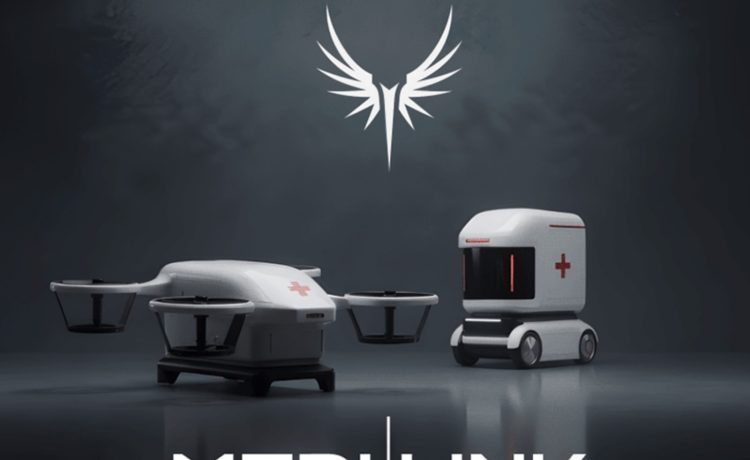
Every minute matters when hospitals are waiting for blood, organs, or other urgent medical supplies. A concept called MediLink tackles that problem with a two-part delivery system designed by Korean designer Seung-Hwan Park. The idea focuses on shortening transfer times between medical facilities and reducing reliance on ambulances, helicopters, and other transport methods currently used for emergency deliveries.
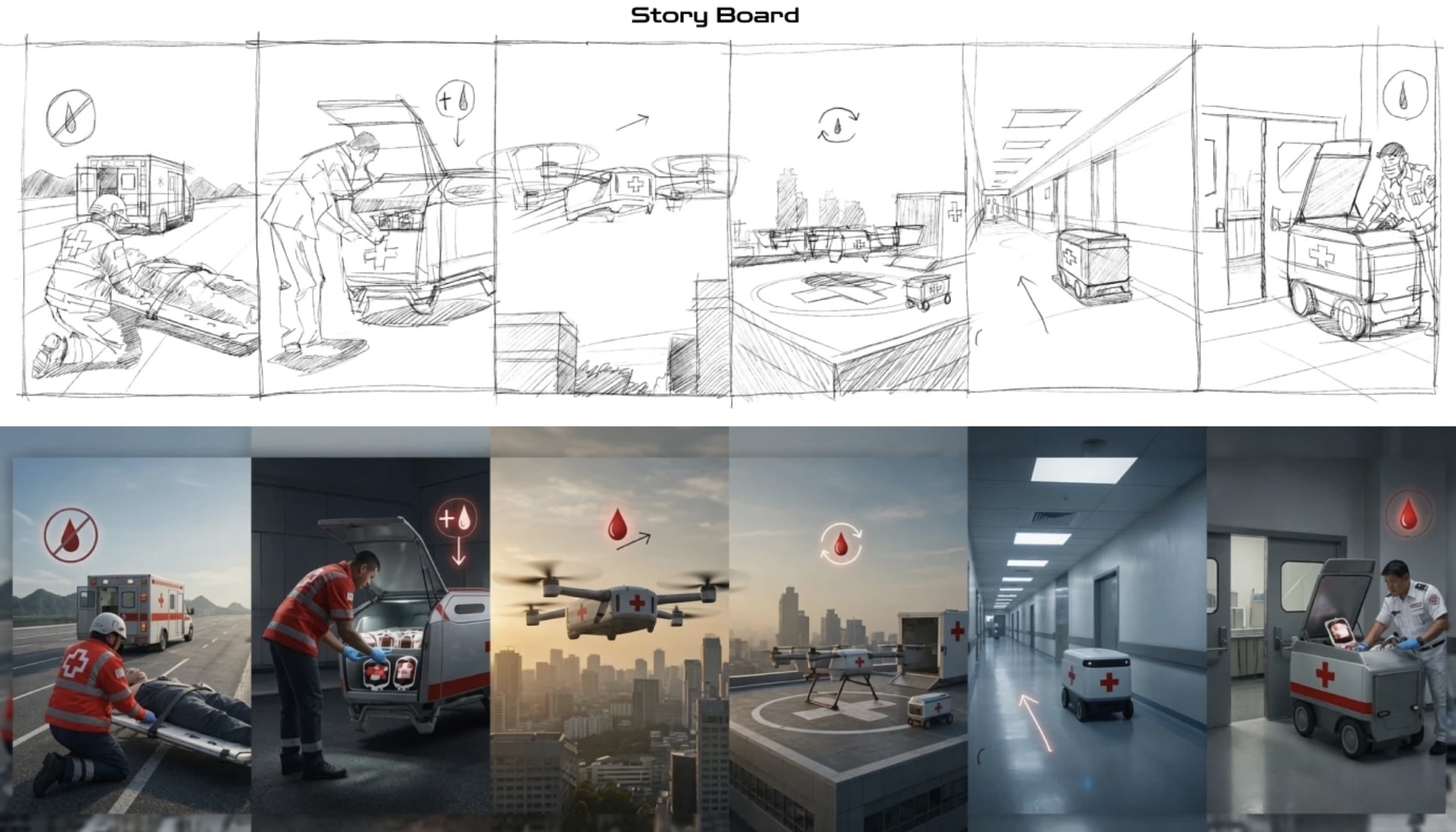
Rather than depending on a single vehicle, MediLink splits the job between an aerial unit and a ground-based one. The first part of the journey belongs to a drone. The second takes place inside the hospital through a compact delivery robot. Together, the two machines form a chain intended to move supplies from a blood bank or another healthcare facility to the location where they are needed.
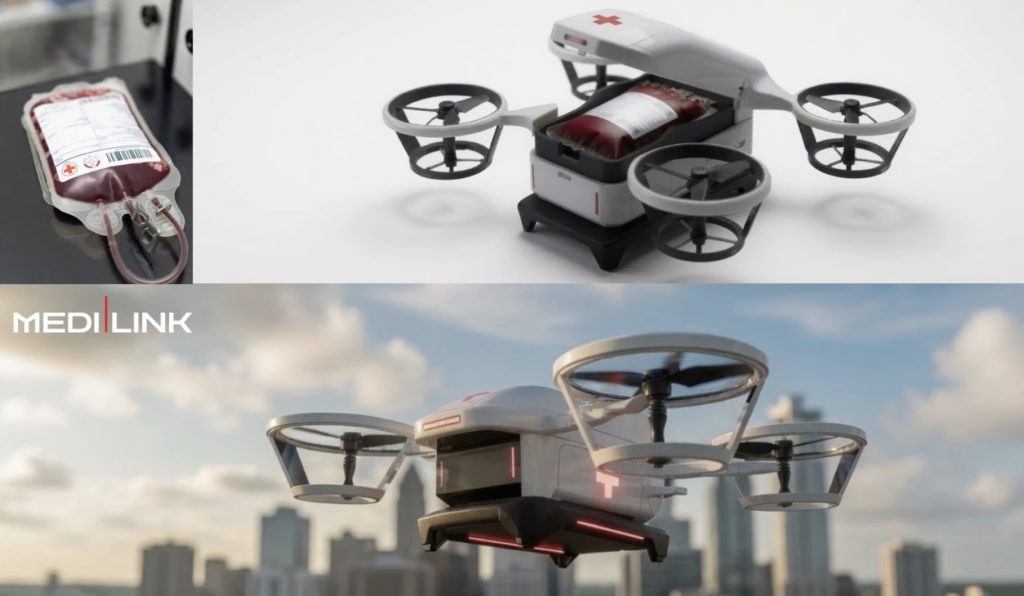
The airborne section handles the longer leg of the route. Blood, organs, or other cargo are loaded into the drone before departure. From there, the aircraft heads toward the rooftop of another hospital or medical establishment. During transport, sensitive materials remain stored at temperatures between 4-5 degrees Celsius. Park’s proposal also includes an onboard battery system capable of keeping blood chilled for up to 48 hours without requiring a recharge.
Speed sits at the center of the concept. According to Park, a delivery requiring as much as 30 minutes by ambulance or other road-based transportation could be reduced to as little as 5 minutes. The article also references sources stating some hospitals have already achieved reductions from 30 minutes to only 3 minutes through drone-based delivery operations. Air routes avoid traffic congestion entirely. A small detail, perhaps, though an important one.
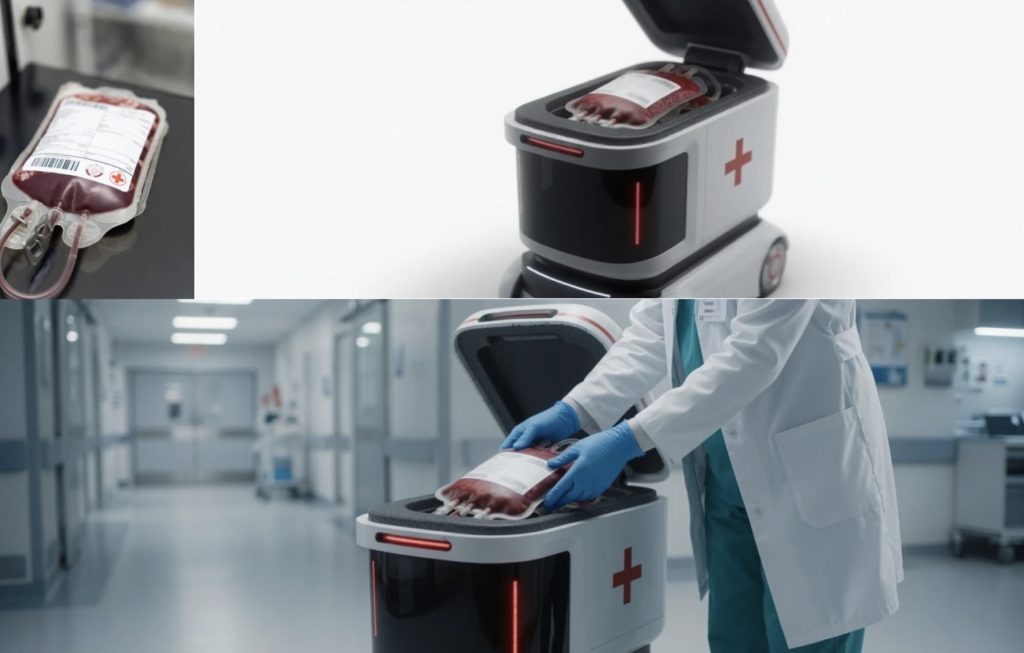
Once the drone reaches its destination, the second phase begins. Cargo moves to a ground-bound robot tasked with carrying supplies through the hospital and delivering them directly to an operation room or emergency room. The robot uses a cooled compartment as well, helping preserve blood or organs during the final stage of the trip without altering their chemical makeup.
Still, several questions remain unanswered within the concept. The transfer process between the drone and the robot is not clearly explained. From the available material, the cargo appears to require manual movement from one machine to the other. A fully automated handoff system is absent from the presentation.
Movement inside hospitals raises another issue. The robot travels from floor to floor, yet the concept does not explain how elevators would function without human assistance. Existing buildings might require modifications before such a system becomes practical.
Even so, MediLink presents a complete vision. Not a finished solution, no. Yet the combination of aerial delivery, refrigerated transport, and hospital navigation points toward one goal: getting life-saving supplies where they are needed in less time.