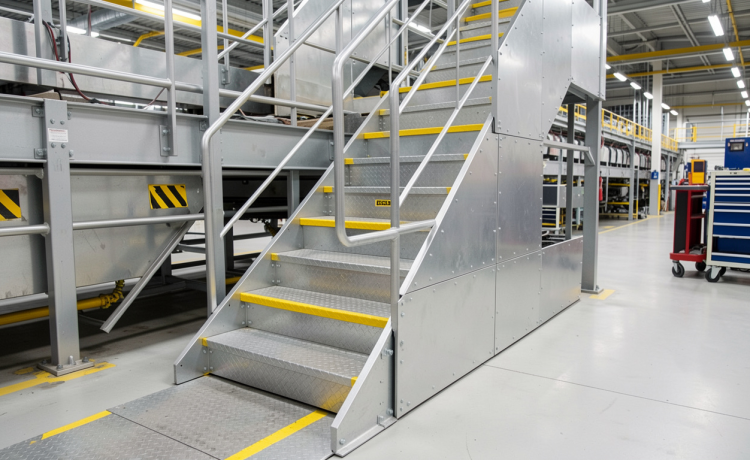
Slip resistance is an important feature when it comes to the environment where safety is a strong concern and when dealing with the area, which is often wet or oily. Stair treads and ramps with raised patterns are also some of the best measures to be used to prevent slips and falls. Such rough surfaces increase the grip and it is a safer route for those people, and their chances of accidents are limited.
Table of Contents
Realizing the Significance of Raised Patterns
Many types of surface patterns are used on stair treads and ramps, however, the raised one is more outstanding because it allows better traction. The textured surface can be used as a shield, regardless of whether the area is subjected to rain, oil spills, or other dangerous situations, which provides a superior grip to pedestrians and vehicles, respectively.
The reason behind the raised pattern is that it creates contact points between the surface and the shoes, tires, or any other traction. Even in very challenging situations, this maximized contact area prevents slips. The texture is different in size since it may be small ridges or more aggressive in the form of grooves, depending on the type of application and the amount of danger that the slip poses in the specific environment.
Applications in Wet or Oily Environments
When working in a factory, warehouse, or any other kitchen, it is always possible to come across a situation where the floor is constantly wet or immersed in oils and other liquids. Such conditions may render the conventional flooring techniques unsafe. The solution to such a risk is the raised-pattern stair treads and ramps.
An example is where a grease and water spillage can cause the floor to be slippery in a kitchen, particularly around cooking or a dishwashing facility. Laying stair treads with raised designs in such places would go a long way in eliminating the possibility of slip-and-fall accidents. Likewise, in factories or warehouses where oils are prevalent, the use of a textured surface will ensure that the employees can move freely without the fear of falling on the wet floor.
The advantage of the application of stair treads and ramps with raised patterns is not just in increasing the level of safety but it is also a durable solution, resilient to constant exposure to extreme conditions without losing its qualities.
Choosing the Right Materials for Raised Patterns
Although the trend is very important, the substance with which the raised surface is made is also equally crucial in its efficiency. Capable of being used to provide the textured stair treads and ramps, these materials include rubber, steel, aluminium, and even some forms of plastics. The materials have their merits depending on the environment they will be put.
An example of this is aluminium, which is a material of choice because it is durable and does not corrode. It is particularly helpful in outdoor or high-moisture conditions where materials such as steel can rust. Aluminium is also available as aluminium checker plates that are utilized within the environment where extra strength is required, though without the extra weight.
Aluminium Checker Plates: Strength Meets Safety
Checker plates made of aluminium are usually popular in conditions where both safety and durability are key factors. Its elevated diamond-shaped design gives it outstanding slip resistance and thus is suitable for use in an industrial environment where traction is required. It is light but tough in nature, a quality that makes it very suitable in use in the automobile industry and factories, as well as on construction sites.
Aluminium checker plates can provide a safe footing when used as stair treads or ramps, and can also be used due to their ability to last a long time in service compared to many other materials. Its corrosion and wear resistance make certain that the textured surface does not become useless after many years of getting exposed to the elements.
Customization of Patterns for Specific Needs
Among the most significant benefits of stair treads and ramps with raised patterns, it is possible to single out the opportunity to adjust the texture to the particular requirements of the environment. Individually, as a case in point, in localities where heavy machinery is utilized, the pattern may be developed to give as much traction as possible to heavy machinery. In other locations, like a communal setting or a home, a less aggressive design is more suitable, providing adequate grip without forgoing comfort.
Flexibility in design permits individual solutions that would improve the safety as well as decorate the space. Indicatively, the raised design on a staircase in a company building can be tailored to suit the theme of the entire design, providing a combination of safety and aesthetics.
Conclusion
Raised patterns on the stair treads and ramps are a convenient, efficient measure to use in a place where slips are very common. The textured surface will be safe for everyone, whether it is wet or oily. The material choice, such as aluminium checker plates, further strengthens the safety aspect while providing durability and resistance to harsh environments. Finally, the fusion of correct design and choice of material will make sure that the stair treads and ramps are not only of the correct and safe standards but that they will also remain valuable for years to come.