The smart safety features are loaded on new cars. They are created to intervene in the case of unresponsive drivers. And in most instances they do so as they were designed.
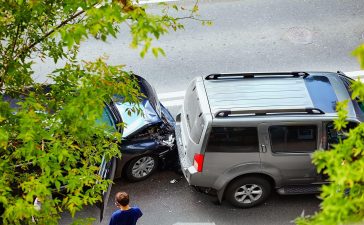
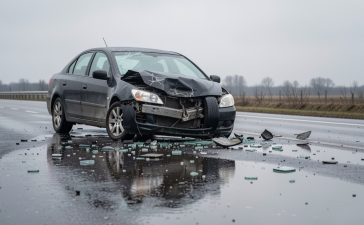
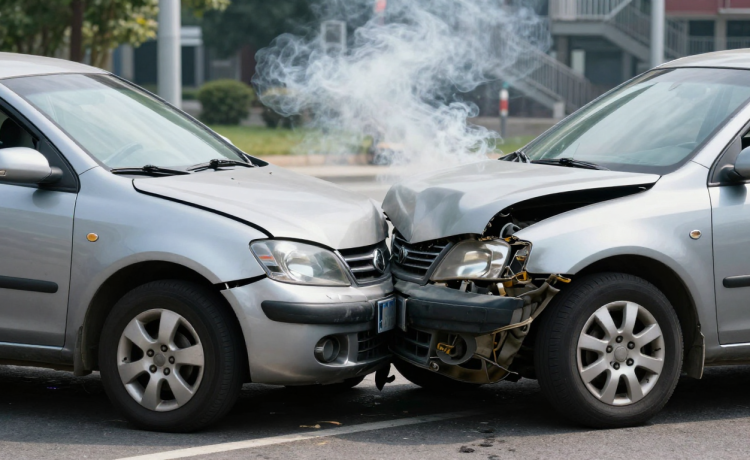
However, this is what is usually ignored. Accidents do not go away in these systems. They transform the manner in which they occur. In practice in the real world, particularly during heavy traffic, a great deal of these features contribute to one of the most frequently occurring types of crashes on the road, rear-end collisions.
We can deconstruct eight situations in which modern car technology can promote accidents, and how to be ahead of them.
1. Adaptive Cruise Control Doesn’t Recognize Stopped Traffic
Maintains speed and distance from vehicles ahead.
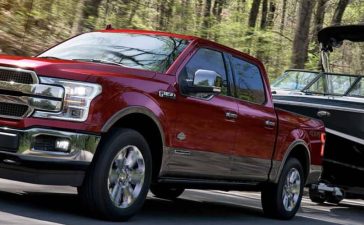
Seen in: Ford F-150, BMW 5 Series, Hyundai Sonata
What happens:
You’re cruising at speed when traffic ahead is fully stopped. Some systems struggle with stationary vehicles, forcing a last-second reaction that increases the risk of being hit from behind.
How to avoid it:
Stay alert when approaching traffic changes. This system supports your driving, it doesn’t replace it.
2. Lane Keeping Assist Interferes With Evasive Moves
The correction steers the vehicle back into the lane when the vehicle is drifting.
Seen in: Nissan Rogue, Kia Sportage, Volkswagen Tiguan
What happens:
You change your position in order to evade debris or a hazard. The system is unresponsive and overreacts. Traffic behind you reacts late.
How to avoid it:
Understand when to override or switch off the system particularly when road conditions are not predictable.
3. Automatic Emergency Braking Slams Too Late (or Too Hard)
Autonomous Emergency Braking (AEB) monitors any impediments and brakes in case the driver fails to respond.
Seen in: Toyota Corolla, Honda Accord, Tesla Model 3
What happens:
The system detects slowing traffic a moment later than expected and brakes aggressively. The driver behind you isn’t prepared for that sudden stop. In that moment, one question comes up fast: whose insurance do you call when someone rear-ends you, and who’s actually responsible when your car brakes itself?
How to avoid it:
Always have a safe following distance and do not rely on the system to do smooth braking in the traffic.
4. Blind Spot Monitoring Misses Fast-Approaching Vehicles
Feature: Alerts drivers to vehicles in adjacent lanes.
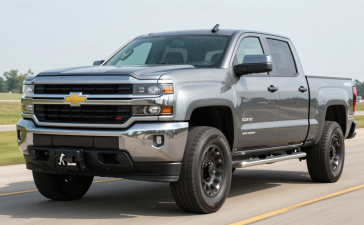
Seen in: Chevrolet Silverado, Mazda CX-5, Subaru Outback
What happens:
A fast-moving vehicle isn’t detected in time, especially one approaching quickly from behind. You start merging, then hesitate or brake when you finally spot it yourself. Such an abrupt stop can be very confusing to other drivers behind you thereby exposing them to the dangers of being hit by the car directly behind them. Even such a slight delay in traffic can create a chain reaction in case of heavy traffic.
How to avoid it:
Use the system as support, not a substitute. Always check manually before changing lanes. Pay extra attention in high-speed lanes where vehicles can enter your blind spot faster than the system updates.
5. Parking Sensors Miss Low or Fast-Moving Objects
Feature: Detects nearby obstacles at low speeds.
Seen in: Audi A4, Lexus RX, Mercedes-Benz C-Class
What happens:
Sensors cannot sense an object that is low such as a short pole or curb, or when a vehicle is approaching at high speed. It is only when you are at the last moment that you realize that this is a hazard and slam on the brakes. The man in the car behind you fails to respond. Such slow-moving collisions are prevalent in parking lots and usually cause unnecessary damage claims.
How to avoid it:
Go slowly and remain visually alert particularly when in a tight or busy parking space. Turn your head and use mirrors rather than just using alerts. Parking tech helps, but it doesn’t interpret movement the way you can.
6. Semi-Autonomous Driving Brakes Unexpectedly
Feature: Systems like Tesla Autopilot assist with steering, speed, and braking.
Seen in: Tesla Model S, Model Y
What happens:
The system also responds slowly in response to abrupt decelerations or brakes more ferociously than a human being would respond. This may occur on cut-ins, shadows or misread lane markings. Drivers behind you aren’t expecting that kind of response, especially on open roads. The result is often a rear-end collision where fault isn’t immediately clear because the vehicle, not the driver, initiated the braking.
How to avoid it:
Be in full awareness and be prepared to assume control in no time. You must not put your hands on the wheel, you must foresee traffic conditions. Consider the system as a co-pilot which should be under constant watch.
7. Rear Cross-Traffic Alert Misses Speeding Vehicles
Feature: Warns of cross traffic when reversing.
Seen in: Honda CR-V, Ford Escape, Jeep Grand Cherokee
What happens:
An oncoming car is not recognized in time, especially in a busy parking area or when it is not clear. You start to reverse successfully, and then you halt as you see the car. The sudden pause can startle another driver behind you and cause a rear-end crash in a low-speed but slower-reaction zone.
How to avoid it:
Look twice before turning around. Do not use alerts as a sole option, particularly where there are unforeseen traffic congestion. The slow, controlled movement will provide more time to respond to you and others.
8. Forward Collision Warning Fatigue Delays Reaction Time
Feature: Alerts drivers of potential frontal collisions without applying brakes.
Seen in: Toyota RAV4, Honda CR-V, Hyundai Tucson
What happens:
Having to stop and go every now and then begins to seem like standard, even unnecessary. With time, drivers start to ignore or postpone their reply to them. Then a genuine danger confronts you, and it is that half a moment that counts. Any slight delay in braking might cause a rear-end collision particularly in congested urban traffic where there is already minimal spacing.
How to avoid it:
Adjust sensitivity when necessary, but do not turn the system off. Take alerts as background noise and not warnings. By remaining mentally active, these systems are much more effective at the time when it really counts.
The Takeaway
The technology of cars is changing rapidly. It is making driving safer in numerous aspects.
Meanwhile, it is developing new habits, new dangers. The major distinction is based on the usage of these systems by the drivers.
Stay engaged. Understand your vehicle. And treat every feature as assistance, not a replacement for your judgment.