By A.J. Bruning
Every year, roughly 40,000 people die on American roads. Behind that statistic are families, careers, and futures cut short by collisions that, in many cases, could have been prevented. The automotive industry knows this, and over the past decade, manufacturers have poured billions into advanced driver-assistance systems (ADAS) designed to close the gap between human error and machine precision.
But how well do these technologies actually work? And what happens when they fall short?
The ADAS Revolution
And, even in the case you have bought a car within the past five years, there are at least several active safety features installed in it. Other features of luxury flagships, like these, are now found on ordinary sedans, crossovers, and trucks. The fundamental technologies can be divided into several categories.
Automatic Emergency Braking (AEB) involves forward-facing cameras and radar that identify a collision that is about to occur and apply brakes provided the driver does not intervene. The Insurance Institute of Highway Safety (IIHS) discovered that AEB will decrease rear-end collisions by about half. That one feature has since saved hundreds of thousands of collisions alone since it has been made widely available.
Lane Departure Warning and Lane Keeping Assist detect road markings, and as the unintended drift is detected the car is gently steered back into its lane. According to the IIHS, these systems cut down on single vehicle accidents, sideswipe and head on accidents by 11 percent, and injuries caused by these accidents by 21 percent.
Blind Spot Detection involves the use of radar sensors, which are placed close to the rear bumper, to monitor the cars in other lanes. An indicator in the side mirror, which may have an audible warning, gives the driver a warning of an error before a lane change is made. Research indicates that the blind spot monitoring lowers the lane change crashes by about 14 percent.
Adaptive Cruise Control allows maintaining a predetermined distance behind the car in front, automatically accelerating and braking in traffic. Even more recent models combine with navigation information to decelerate around curves and highway exits and even speed limits on the highway, so long-range driving is significantly less exhausting.
If you have purchased a vehicle in the last five years, chances are it came equipped with at least a few active safety features. What was once exclusive to luxury flagships is now standard on mainstream sedans, crossovers, and trucks. The core technologies fall into a few key categories.
The Numbers Are Encouraging
The cumulative effect of such systems can be measured. The National Highway Traffic Safety Administration (NHTSA) estimates that vehicles that come with ADAS experience fewer injury-causing crashes per driven mile than vehicles that lack the technology. This is supported by data on insurance claims. Carriers are even starting to give premium discounts to vehicles having detailed safety suites and that is a definite indicator that the actuarial arithmetic is behind the technology.
It matters to those who enjoy spending weekends in the lap times or arguing about the horsepower numbers because the safer the general vehicle on the road, the more headroom people have. One less car to avoid an emergency is an absent-minded commuter with automatic car brakes.
Where the Technology Falls Short
Although this has been attained, ADAS is not foolproof. The knowledge of what is not possible is as significant as the insight into what is possible.
Limitations of sensors in unfavorable environments. Direct sunlight, snow, fog, and rain may worsen the performance of the cameras and radar. There are systems that will completely shut down and leave control back in the hands of the driver with minimal or no warning.
Poor performance between brands. The behavior of these systems is not subject to some standards. It is well known that the aggressiveness of AEB calibration, intervention thresholds, and steering assist depends on the manufacturer and even model years within the same brand.
Too much dependence on each other and complacency. Possibly, the worst restriction is a psychological one. Drivers who have too much faith in the technology might lessen their attention, be more sluggish, or think the car can deal with circumstances to which it was not intended. Most of the current systems (SAE Level 2 systems) mandate the driver to be fully engaged. The steering wheel is not an option.
Gaps in the detection of pedestrians and cyclists. Although forward-collision systems have improved considerably in terms of vehicle-to-vehicle, they are not able to detect pedestrians, cyclists, and motorcyclists, especially during the night or at speeds exceeding the usual speed.
When Technology Fails and a Crash Happens
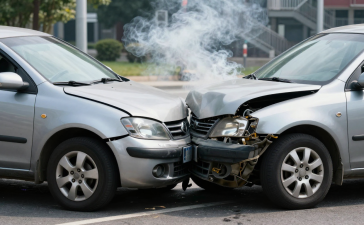
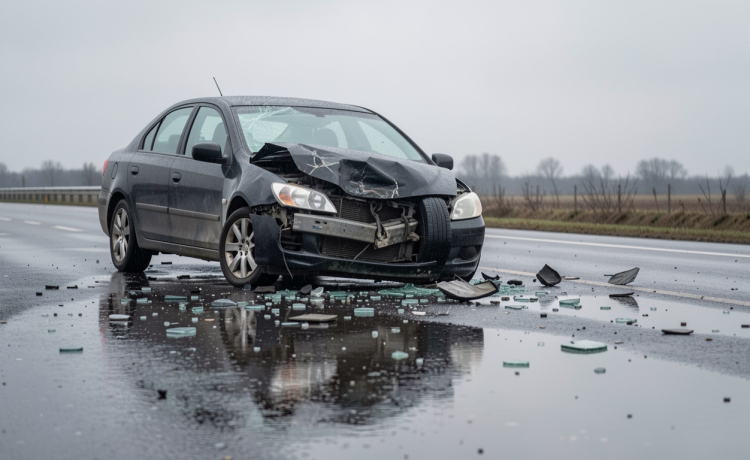
There is no safety system that can be said to remove risk. ADAS may not be able to stop a collision thus the consequences may be complex. Liability questions may be more sophisticated when the automated systems of a vehicle were turned on during an impact occurrence. Was the driver attentive? Was the system doing what it claimed to do? Was there a defect in the software that caused the crash?
These are some of the questions the seasoned car accident attorney can assist in answering. Crash investigations of the modern era put more and more emphasis on retrieving data logs conducted by vehicle sensors and interviewing engineering personnel to establish precisely what occurred in the few seconds prior to the point of impact.
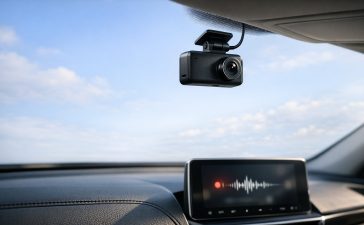
In case of an accident, if you were in a crash where ADAS was active, record all the details. Record dashcam film, when available, document systems in operation, and ask that an event data recorder on the vehicle be saved prior to the vehicle being repaired.
The Road Ahead
The trajectory is clear. ADAS will keep on getting better, and one day, fully autonomous driving will come in one way or another. However, we are in an intermediate stage with the technology being good enough to assist, but not yet.
unreliable enough to take the place of a watchful driver.
At this point, the most correct solution is to regard these systems as a safety net but not as a replacement for skill and awareness. Know the capabilities and the limitations of your vehicle. Read the manual of your ADAS suite owner. And drive like the technology may not be activated when you most require it, like there are times when it will not.
The cars are getting smarter. The responsibility behind the wheel has not changed.
A.J. Bruning is the founding partner of Bruning Law Firm in St. Louis, Missouri, specializing in personal injury cases including car accidents, truck accidents, and workers’ compensation.