Fiat’s pickup strategy in Brazil has already entered a new phase with the arrival of the 2027 Fiat Toro MHEV, introduced as the country’s first mild-hybrid pickup. The company points to urban efficiency improvements of up to 11.7 percent, yet discussion around the model increasingly revolves around something else: what replaces the current Toro after nearly a decade on the market.
Age is becoming part of the conversation. The compact pickup first appeared in 2016 and rides on the Fiat Small Wide 4×4 architecture, a platform shared at the time with the Jeep Renegade, Jeep Compass, and Fiat 500X. By next year, the Toro will have crossed the ten-year threshold. Even with an updated electrified powertrain, the underlying package no longer feels fresh compared with newer arrivals.
Competition has not stood still either. In South America, the Toro continues battling for attention against rivals such as the Ram Rampage and the Chevrolet Montana, a smaller pickup frequently compared against entry-level and mid-range Toro versions. More pressure is approaching from several directions. Renault has the Niagara on the horizon, Volkswagen has already teased the Tukan, and reports continue to point toward a Toyota hybrid pickup potentially linked to the Corolla Cross architecture.
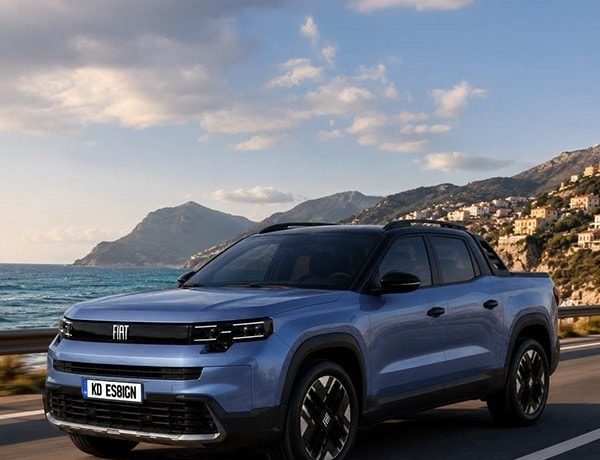
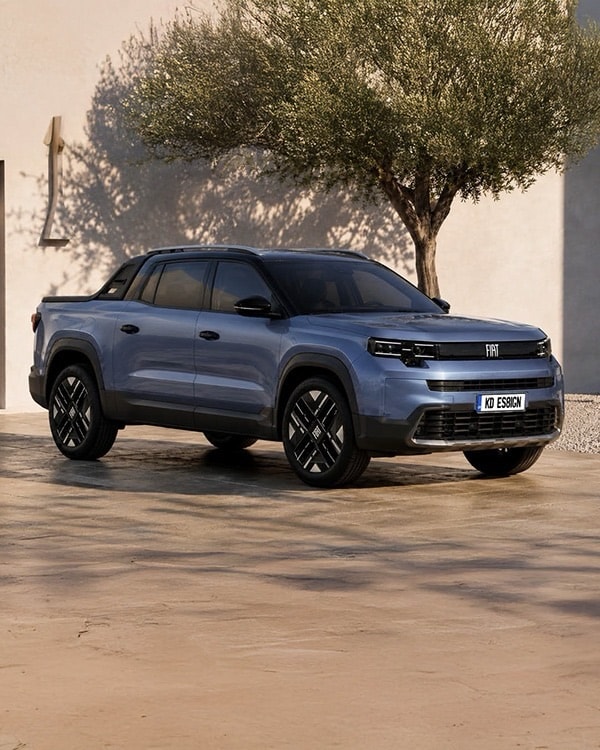
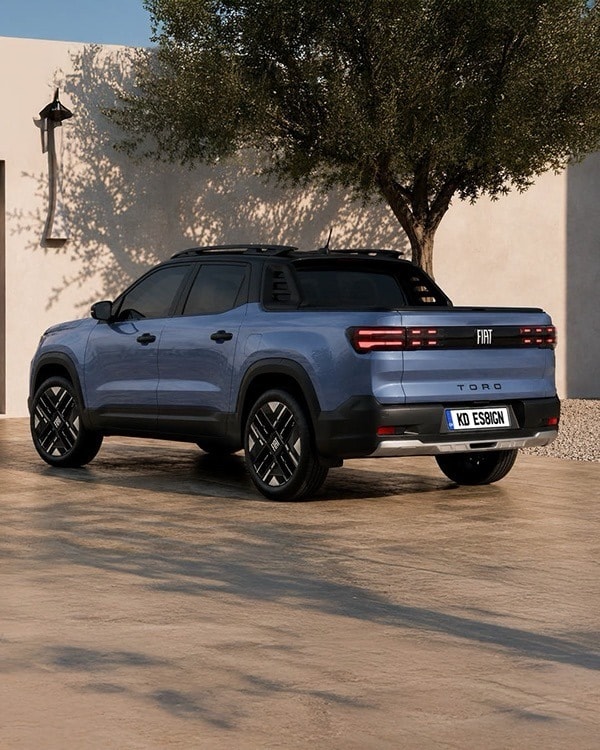
Against that backdrop, Brazil-based digital artist Kleber Silva, known online as “KDesign AG,” published a virtual interpretation of a second-generation Fiat Toro. His rendering project envisions a future replacement for what he describes as Brazil’s most beloved pickup truck.
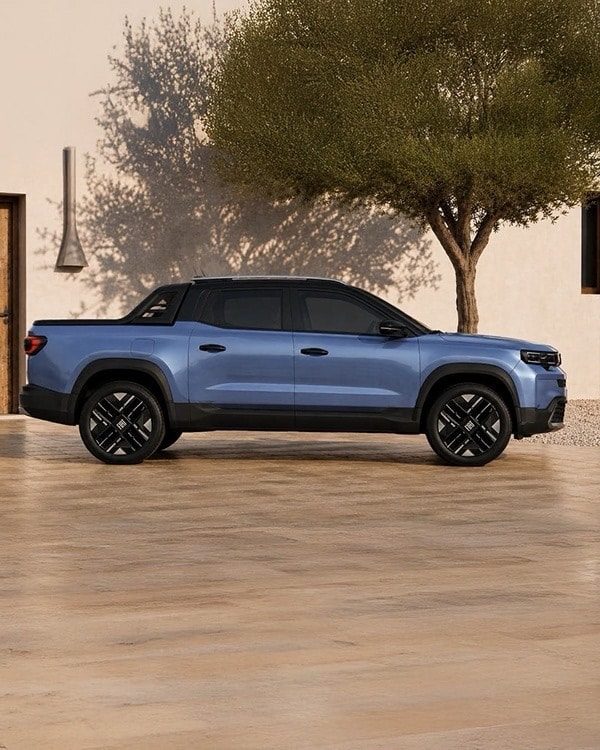
The styling direction draws influence from the recently introduced Fiat Grizzly and Grizzly Fastback crossovers. Beneath the bodywork, though, the proposal shifts toward a different technical route. Silva imagines dimensions and engineering closer to the latest Jeep Compass. The third-generation Compass is already in production in Italy, where buyers gain access to a 1.2-liter turbo mild hybrid, a plug-in hybrid derivative, and a fully electric version available with two battery-size choices.
Powertrain possibilities extend beyond Europe in this unofficial concept. For the Brazilian-market Toro, the artist suggests borrowing mechanical components from the North American Jeep Compass lineup. That package includes the 2.0-liter Hurricane 4 Evo T engine as well as the 1.6-liter hybrid system used by the all-new Cherokee. The idea combines updated Fiat design language with a technical package linked to current Jeep products.
There is also a wider corporate backdrop. Under Stellantis’ latest strategic plan, Fiat now sits among the group’s core global brands alongside Jeep, Ram, and Peugeot. According to the plan, those brands receive up to 70% of all investments together with the commercial-vehicle division, Stellantis Pro One. If that allocation remains in place through the end of 2030, new Fiat projects are unlikely to be in short supply.